Liquidating Crypto Strategically: How Smart Holders Exit Positions Without Destroying Value or Triggering a Tax Nightmare

For most retail investors, buying cryptocurrency feels like the hard part. Timing the entry, conducting due diligence, managing the anxiety of early volatility—these challenges consume the majority of attention. Yet experienced market participants know that the exit is often where fortunes are made or quietly surrendered. Whether you hold a modest position or a portfolio deep enough to influence token liquidity, how you leave the market matters as much as when you arrived.
At DochCoin, we observe this dynamic repeatedly across market cycles. Investors who entered Bitcoin, Ethereum, or emerging altcoins at favorable valuations often find themselves paralyzed when conditions shift in their favor. The instinct to act quickly collides with the reality that large or poorly timed sell orders can depress prices, generate unwanted tax events, and leave money on the table. This guide addresses those friction points directly.
Understanding Market Impact Before You Sell
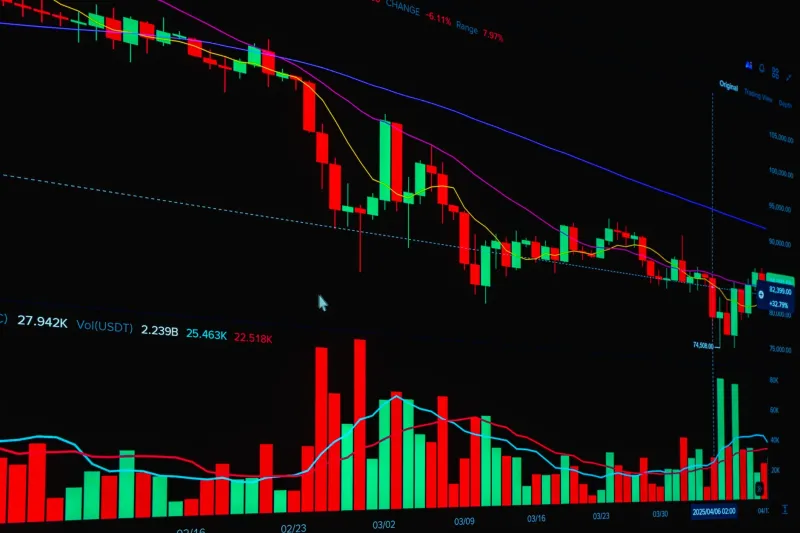
Every sell order you place enters a market with finite liquidity. For major assets like Bitcoin or Ethereum trading on deep, institutional-grade exchanges, a retail investor's position rarely causes meaningful price disruption. However, for mid-cap and small-cap tokens—assets with lower daily trading volumes and thinner order books—even a modest liquidation can move the price against you.
This phenomenon, known as slippage, occurs when your sell order consumes available bids at the current price and begins filling at progressively lower levels. A $50,000 exit on a token with $500,000 in daily volume can easily result in 3–5% slippage, meaning you receive substantially less than the quoted price at the time you initiated the trade.
Sophisticated holders—often referred to as "whales" in crypto parlance—mitigate this through several mechanisms. They distribute large orders across multiple exchanges, execute trades during peak liquidity windows (typically overlapping US and European market hours), and use limit orders rather than market orders to define acceptable exit prices. DochCoin's market data tools allow investors to assess order book depth before executing, giving you a clearer picture of how much liquidity actually exists at your target price.
Time-Weighted and Value-Averaged Exit Strategies
One of the most effective frameworks for liquidating a meaningful position is the time-weighted average price (TWAP) approach, borrowed from institutional equity trading. Rather than executing a single large sell, you break the position into equal tranches and distribute those sales across a defined period—days, weeks, or months depending on your urgency and the asset's liquidity profile.
Consider a practical scenario: an investor holds 40 ETH accumulated at an average cost basis of $1,200. With Ethereum trading near $3,500, the unrealized gain is substantial. Rather than selling the entire position in a single session, a TWAP strategy might distribute the exit across eight trading days, selling five ETH per day during high-volume windows. This approach reduces slippage, smooths out short-term price fluctuations, and creates a defensible, documented exit strategy—useful if the IRS ever scrutinizes the timing of your transactions.
A variation on this method is the value-averaged exit, where you set a target dollar amount to liquidate per period rather than a fixed token quantity. If prices rise during your exit window, you sell fewer tokens to hit the dollar target. If prices fall, you sell more. This dynamic approach can marginally improve average realized prices during volatile conditions.
The Tax Architecture of a Thoughtful Exit
No conversation about cryptocurrency liquidation in the United States is complete without addressing the Internal Revenue Service's treatment of digital asset sales. Under current IRS guidance, every disposition of cryptocurrency—whether sold for dollars, exchanged for another token, or used to purchase goods and services—constitutes a taxable event.
The tax rate applied to your gain depends on your holding period. Assets held for twelve months or fewer are taxed as ordinary income, which for many US investors means rates between 22% and 37%. Assets held longer than twelve months qualify for long-term capital gains treatment, with rates of 0%, 15%, or 20% depending on your total taxable income. For a high-income investor, the difference between a short-term and long-term exit can represent tens of thousands of dollars on a meaningful position.
This distinction should influence your liquidation timeline. If you are sitting on a position that crosses the twelve-month threshold in sixty days, waiting—assuming market conditions remain acceptable—could substantially reduce your tax liability. DochCoin recommends tracking acquisition dates meticulously, as many investors underestimate how dramatically the holding period calculation affects their net proceeds.
Additionally, US investors should be aware of specific identification accounting. Rather than defaulting to FIFO (first in, first out), which automatically assigns your earliest-purchased tokens to each sale, specific identification allows you to designate which tax lots you are selling. Strategically selecting higher-cost-basis lots can minimize the gain recognized in any given tax year, a particularly valuable tool when you have accumulated the same asset at varying price points over time.
Harvesting Losses Alongside Gains
A sophisticated liquidation plan does not exist in isolation—it should account for your broader portfolio position. If you are exiting a profitable holding, examine whether other positions in your crypto portfolio are currently sitting at unrealized losses. Selling those losing positions in the same tax year generates capital losses that offset your gains dollar for dollar, a strategy known as tax-loss harvesting.
Unlike equities, cryptocurrency is not currently subject to the wash-sale rule under US tax law, meaning you can sell a token at a loss and immediately repurchase it to reestablish your position while still claiming the loss. This regulatory gap, while potentially subject to future legislative change, currently offers crypto investors a degree of tax flexibility unavailable to stock traders.
Documenting these transactions properly is essential. Maintain records of every trade's date, amount, cost basis, and proceeds. Many US investors rely on dedicated crypto tax software that integrates with exchange APIs, but verifying those outputs against DochCoin's on-chain data can surface discrepancies before they become audit liabilities.
Establishing Your Personal Liquidation Protocol
The most effective exit strategies share a common trait: they are defined before market conditions create emotional pressure. A liquidation protocol established during calm, analytical conditions is far more likely to be executed rationally than one formulated during a market downturn or euphoric rally.
Your protocol should specify the price levels or portfolio percentage thresholds that trigger a review of your exit plan, the time horizon over which you intend to distribute sales, the tax lot selection methodology you will apply, and the exchanges or trading venues you will use based on their liquidity profiles for each asset you hold.
At DochCoin, we believe that disciplined position management is the defining characteristic separating investors who compound wealth across cycles from those who give back gains unnecessarily. The blockchain does not reward impulsive behavior—and neither does the IRS.
Exiting the market is not a failure of conviction. It is the completion of an investment thesis, executed with the same precision that informed your original entry. Treat it accordingly.